


23 Oct What to Expect from the Recruitment Process in South Africa
If you’re wondering what to expect from the recruitment process in South Africa, you’re not alone. The journey from job search to successful placement can feel overwhelming, especially in a market as dynamic and diverse as South Africa’s. At Afro Ant, we’ve seen first-hand how understanding the recruitment process can make all the difference for candidates. Whether you’re a project manager, business analyst, IT developer, or another specialist, knowing what lies ahead helps you prepare, perform, and ultimately thrive.
This article will guide you through each stage of the recruitment process, highlight common scenarios, and share practical advice to help you navigate your next career move with confidence.
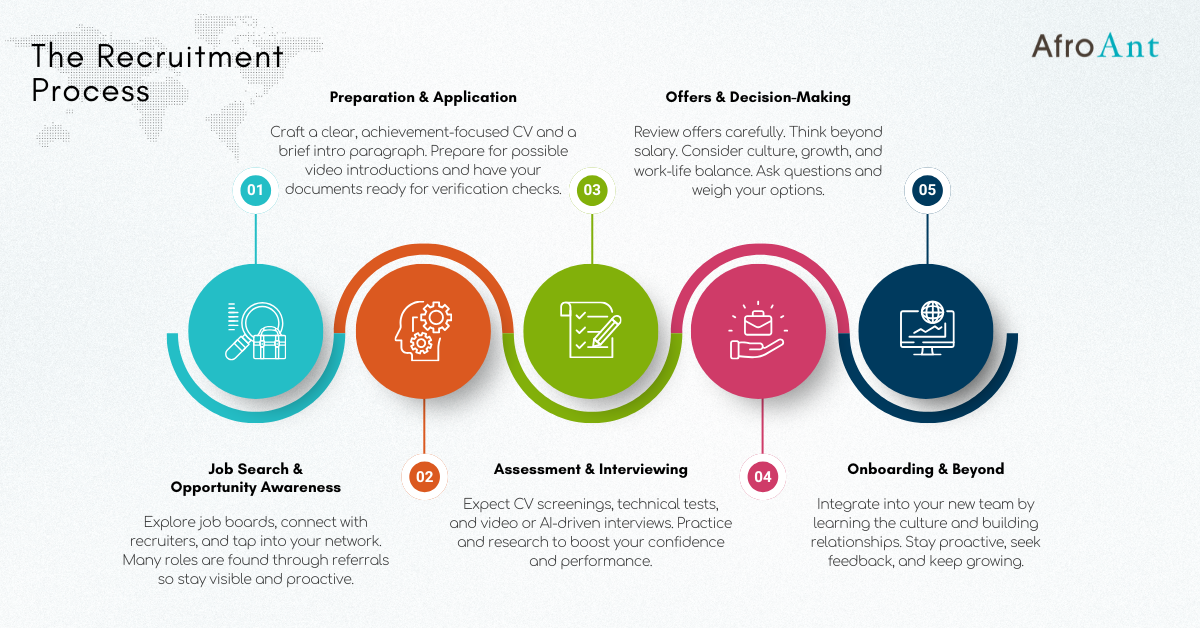
The Recruitment Process: An Overview
When considering what to expect from the recruitment process in South Africa, it’s helpful to break the journey into five key stages: Start, Pre, During, Consideration, and Post. Each stage brings its own set of expectations, challenges, and opportunities.
Understanding this pipeline is crucial. Many candidates feel anxious about what happens next, but a clear roadmap can ease those nerves. At Afro Ant, we believe in transparency and support at every step. Our approach is tailored to the South African context, blending global best practices with local insights.

Stage 1: Start – Job Search & Opportunity Awareness
The first step in any recruitment process is recognising the need for change and beginning the search for new opportunities. In South Africa, this often means browsing job boards, reaching out to recruitment agencies, and tapping into professional networks. It’s not uncommon for candidates to hear about roles through word of mouth or industry contacts.
Take, for example, Sipho, a business analyst who found his last role after a former colleague recommended Afro Ant. “I’d been applying online for months with little luck. It was only when I started networking and asking around that I discovered opportunities I’d never seen advertised,” he recalls.
Afro Ant’s network is a valuable resource for candidates. We encourage you to build your own connections, both online and offline. For tips on making the most of LinkedIn, see Let’s Get Personal: LinkedIn for the Corporate Soul.
Stage 2: Pre-Preparation & Application
Once you’ve identified a promising opportunity, preparation becomes key. In South Africa, employers expect a well-structured CV and intro paragraph. Increasingly, video introductions are also requested, giving candidates a chance to showcase their personality and communication skills.
A good CV should highlight relevant experience, technical skills, and achievements. For example, Thandi, an IT developer, credits her success to a concise CV that focused on project outcomes rather than just duties. “I included a short video introduction, which felt awkward at first, but it helped me stand out,” she says.
During this phase, integrity and verification checks (such as ID, academic, criminal, and financial) may be required, usually before interviews. Additional checks can depend on the industry or role. Let your referees know they might be contacted for a character reference, and choose someone you’ve reported to, not just a colleague.
If you’re unsure where to start, Afro Ant offers guidance on CV writing and interview preparation. For more insights, read 5 Things I wish I knew at the start of my career as a Business Analyst.

Stage 3: During – Assessment & Interviewing
What to expect from the recruitment process in South Africa during interviews and assessments? This stage can be the most nerve-wracking, but preparation and understanding go a long way.
Many large companies use Applicant Tracking Systems (ATS) to screen CVs before moving candidates to the next stage. Technical assessments are also common, especially for IT and engineering roles. These might include coding challenges, case studies, or psychometric tests.
First-round interviews are often conducted via video platforms, and some companies use AI-driven interviews. One candidate, Musa, shared, “I was surprised when the interview was with an AI platform. It recorded my answers and analysed my tone and confidence. Practising with friends beforehand helped me feel more comfortable.”
Remember, each organisation’s process may differ. One advantage of working with a consulting house is that you benefit from their in-depth knowledge of the client’s environment. Afro Ant ensures candidates are thoroughly briefed on what to expect, so there are no surprises. For more on technical interviews, see 5 Insights from Seasoned Software Developers.
Stage 4: Consideration – Offers & Decision-Making
Receiving an offer is exciting, but it’s important to evaluate it carefully. Consider not just the salary, but also the organisation culture, growth prospects, and work-life balance.
Afro Ant supports candidates through this decision-making process. For instance, Lerato, a project manager, was torn between two offers. “One role offered a better package, but the other had a better team culture and learning opportunities. Afro Ant helped me weigh the pros and cons, and I chose the role that matched my long-term goals.”
It’s normal to have questions at this stage. Don’t hesitate to ask for clarification on benefits if it’s a permanent role, expectations, or career progression.
Stage 5: Post-Onboarding & Beyond
Onboarding is more than just paperwork. In South Africa, successful integration into a new team often depends on understanding workplace culture and building relationships.
Afro Ant’s support doesn’t end once you start your new role. We check in with our consultants to ensure they’re settling in and offer advice on navigating challenges. For example, Nomsa, an IT architect, found her first month overwhelming. “Having someone to talk to about my concerns made a big difference,” she says.
Long-term success comes from being proactive, seeking feedback, and staying open to learning. Building strong relationships with colleagues and managers can help you thrive.

What Candidates Should Align To
Standing out in the South African job market requires more than technical skills. Employers value adaptability, curiosity, and a positive and proactive attitude. Candidates who show initiative, communicate clearly, and embrace feedback are more likely to succeed.
Afro Ant encourages candidates to stay informed about industry trends, participate in professional development, and make the most of every opportunity. “Be open to learning, and don’t be afraid to ask questions,” advises one of our senior consultants.
Afro Ant’s Expertise & Candidate Experience
Knowing what to expect from the recruitment process in South Africa is easier with the right support. Afro Ant’s expertise ensures candidates are well-prepared and confident at every stage. Our transparent approach and ongoing communication set us apart.
Here’s what some of our candidates have said:
I am a Business Analyst and have been in partnership with Afro Ant for the last 4 years. I couldn’t ask for a better support network that I have with my Ant family. The level of communication and value that they provide can’t be matched.
Afro Ant is honestly the best community I can belong to. They’ve welcomed me with open arms since 2020 and I can confidently say, it’s my happily ever after.
For more on what a recruitment agency should do for you, read What should my recruitment agency be doing for me? and Spot the Red Flags: Bad Recruitment Agency Practices.

Frequently Asked Questions
How long does the recruitment process usually take in South Africa?
It varies, but most processes take between two and six weeks, depending on the role and organisation.
What documents are typically required?
A CV, ID, matric certificate, academic certificates, a populated consent form to run academic/criminal/verification checks, and sometimes a video introduction.
Are video interviews common?
Yes, especially since the pandemic. Many companies use video platforms or AI-driven interviews.
How can I prepare for technical assessments?
Practise with sample tests, review the job description, and ask your talent specialist for tips.
What support does Afro Ant offer after placement?
We provide ongoing support, check-ins, and advice to help you succeed in your new role.
Conclusion
Now you know what to expect from the recruitment process in South Africa. By understanding each stage and preparing thoughtfully, you can approach your job search with confidence. Afro Ant is here to support you every step of the way, from your first application to long after you’ve started your new role.
Ready to take the next step in your career? Submit your CV, connect with Afro Ant on LinkedIn, or schedule a consultation to discuss your goals. Your next opportunity could be just around the corner.